

1876-1926
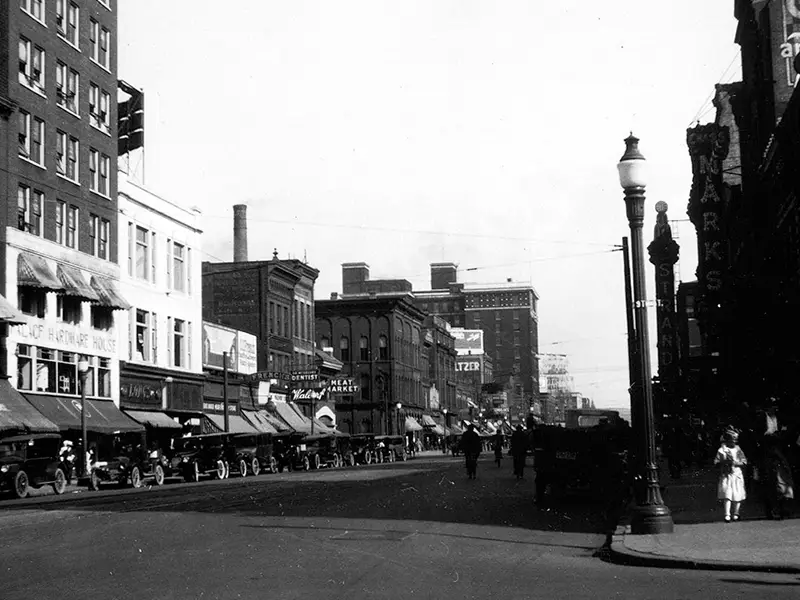
Industrial Growth, Immigration, and Urban Expansion
From 1876 to 1926, Erie grew into a heavily industrial city. Manufacturers produced boilers, engines, metal goods, paper, and other products that earned Erie a strong reputation in American industry. Factories and machine shops expanded alongside the city’s harbor and rail network.
This growth brought new waves of immigrants from Ireland, Germany, Italy, Poland, and Eastern Europe. Their labor powered Erie's factories, while their churches, businesses, and neighborhoods helped shape the city’s lasting cultural identity.
Downtown Erie became denser and more civic-minded during this period. Major churches, theaters, banks, and commercial buildings gave the city a stronger urban character. Yet growth also created risks. In 1915, a devastating flood swept through Erie after Mill Creek overflowed, killing dozens and destroying hundreds of homes. The disaster led the city to bury much of the creek in a large underground culvert.
The era ended with both confidence and change. Erie Insurance was founded in 1925, and new downtown construction reflected continued optimism. By 1926, Erie was a proud industrial and immigrant city, but one about to face the economic uncertainty of the coming decades.
Erie County’s Industrial Growth
Hear how Erie County changed from 1876 to 1926 as manufacturing, immigration, and urban growth reshaped the region. This era brought expanding factories and neighborhoods, the devastating Mill Creek Flood of 1915, and the founding of Erie Insurance as Erie developed into a major industrial community.
1876–1926 Photo Experience
Choose an overlay, then take a photo. Photos stay on your device.
If your camera permission is blocked.
- Open your iPhone Settings
- Tap Safari → Camera
- Set it to Ask or Allow
- Then go back to this page and tap Start camera again